



What to Expect from Your St. Augustine Lawn in March
February 27, 2026
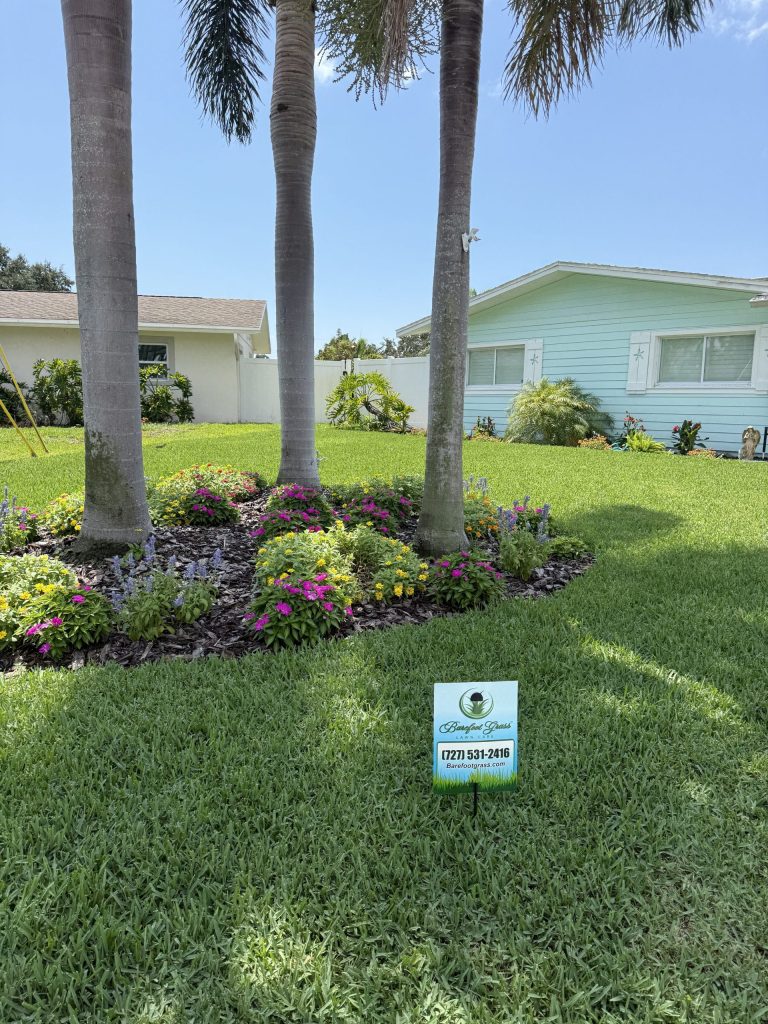
March is a transitional month for St. Augustine lawns in St. Petersburg, especially for homeowners investing in professional lawn care services to prepare for the growing season.
The cold snaps of February are behind us, the days are getting longer, and that warm Florida sunshine is pulling your lawn out of its semi-dormant winter state.
It is not the fast mow-twice-a-week growth of August — not yet — but the lawn is waking up, and what you do this month will determine how well it performs all summer long.
Your Lawn Is on the Move — But Not All at Once
Don’t be surprised if your lawn looks uneven coming out of winter. Parts of the lawn in full sun will green up and start growing faster than shaded areas. Spots with better soil, better irrigation coverage, or more root depth will outpace the rest.
This is completely normal. Be patient. Given water and time, all of it will eventually fill in and reach that five-to-six-inch canopy height your St. Augustine needs to survive the hot, dry months ahead.
Raise your mower height now if you haven’t already. A taller canopy protects the above-ground stems — called stolons — from the punishing Florida sun.
That canopy also shades the soil, conserves moisture, and naturally crowds out weeds. Mow at the highest setting your mower allows – the taller the better.
Irrigation Is Your Number One Priority This Month
March marks the middle of the dry season in St Petersburg. From now through July, weeks can pass without meaningful rainfall. Our sandy soils hold virtually no water — after 72 hours without rain or irrigation, the soil is dry and your lawn is already stressed. Irrigation is mandatory – the better your irrigation, the better your lawn.
If you want to spend your time and money on one thing to improve your lawn this spring, spend it on the irrigation system. Check every zone. Look for heads that are clogged, tilted, or not rotating.
Make sure every inch of the lawn is getting covered. Pay special attention to the edges along driveways and sidewalks — that is where drought stress almost always shows up first.
March is also a smart time to establish a relationship with a reputable irrigation repair company. When the heat of May and June hits and your lawn is showing drought stress, irrigation companies are slammed. Customers who already have a relationship get prioritized. Don’t wait until it’s an emergency.
Forget the Fertilizer and Herbicides — For Now
Walk through any big-box store this time of year and you’ll see every variety of weed-and-feed, pre-emergent, and lawn starter fertilizer imaginable. It is tempting. Resist it.
Your lawn is just coming out of semi-dormancy. Pushing it with nitrogen too early can cause more harm than good. If you are a Barefoot Grass customer, you don’t need to worry about any of this — your lawn’s nutrition, weed control, and pest control program is already being managed for you on a schedule that matches what the turf actually needs.
For homeowners managing their own lawns, March is not the time to experiment with herbicides. Weed killers in the hands of someone unfamiliar with rates, timing, and product selection tend to produce one of two outcomes: nothing happens, or the grass gets burned along with the weeds. Either way, you’ve lost time and money.
About Those Weeds
March is peak season for winter annuals — oxalis, clover, yellow rocket, and other cool-season weeds. They are at their biggest and showiest right now. Here is the thing about winter annuals: they are already dying.
As soil and air temperatures rise in March and April, these plants complete their life cycle and disappear on their own. The lawn growing back in around them is the best weed control available.
There is a persistent myth that weeds can choke out or kill a St. Augustine lawn. They cannot.
Weeds are ugly — no argument there — but they are a symptom, not the cause. Weeds fill in where the turf is thin, stressed, or struggling. Fix the water, raise the mower, and let the lawn come back strong, and it will crowd them out naturally.
What March Really Calls For
The homeowners who come outside in March, survey the yard, and immediately reach for a bag of fertilizer or a bottle of weed killer are the ones who tend to have the most trouble come summer.
The homeowners who walk the irrigation system, replace a few broken heads, and start mowing at the highest setting are the ones whose lawns look best by June.
March is about preparation, not intervention. Get the water right, raise the mower, and let your St. Augustine lawn do what it has done every spring in St. Petersburg — come back to life.


